What's New Here?

Showing posts with label Beverages. Show all posts

Refreshing Pineapple-Basil-ade

Are you loving summer? Keeping cool enough? Brandon has been going crazing with making green, refreshing drinks this summer. He's experimented with tons of different combinations that are so good! Unfortunately, he's known for not following a recipe and not writing down his recipes, so most of the time I can't replicate them...but...yesterday I followed him around while he made this one. I wrote down the ingredients so I could share it for you to enjoy too! YUM! It is definitely a winner. I'm calling it Pineapple-Basil-ade! Enjoy!


Pineapple-Basil-ade
Printable Recipe

*Serves 3-4

INGREDIENTS:
2 Cups Water
1/8 Cup fresh basil (must be fresh!)
1-1/2 tsp. fresh ginger root, chopped
1 20-oz. can of undrained pineapple (any style) *see note
1/4 - 1/2 Cup white sugar, to taste (or use alternative sweetener)
2 Cups ice

*Note: If you want to give yourself an even better treat, use 1/2 of a fresh pineapple, peeled and roughly chopped, plus the pineapple core.  

DIRECTIONS:
In a large, high-powered blender, combine the water, basil, fresh ginger root and pineapple and blend well. Add the white sugar (or alternative sweetener) to taste and puree well. Add the ice and blend for a couple of minutes until smooth and frothy. Serve immediately and enjoy immensely!

Variation:
If you add a handful of spinach or chard in the blender first and blend it up with the first ingredients, it adds nutrition, doesn't compromise flavor, makes it a little greener, and it's REALLY good!

Refreshing Pineapple-Basil-ade

Posted by admin

Are you loving summer? Keeping cool enough? Brandon has been going crazing with making green, refreshing drinks this summer. He's experimented with tons of different combinations that are so good! Unfortunately, he's known for not following a recipe and not writing down his recipes, so most of the time I can't replicate them...but...yesterday I followed him around while he made this one. I wrote down the ingredients so I could share it for you to enjoy too! YUM! It is definitely a winner. I'm calling it Pineapple-Basil-ade! Enjoy!


Pineapple-Basil-ade
Printable Recipe

*Serves 3-4

INGREDIENTS:
2 Cups Water
1/8 Cup fresh basil (must be fresh!)
1-1/2 tsp. fresh ginger root, chopped
1 20-oz. can of undrained pineapple (any style) *see note
1/4 - 1/2 Cup white sugar, to taste (or use alternative sweetener)
2 Cups ice

*Note: If you want to give yourself an even better treat, use 1/2 of a fresh pineapple, peeled and roughly chopped, plus the pineapple core.  

DIRECTIONS:
In a large, high-powered blender, combine the water, basil, fresh ginger root and pineapple and blend well. Add the white sugar (or alternative sweetener) to taste and puree well. Add the ice and blend for a couple of minutes until smooth and frothy. Serve immediately and enjoy immensely!

Variation:
If you add a handful of spinach or chard in the blender first and blend it up with the first ingredients, it adds nutrition, doesn't compromise flavor, makes it a little greener, and it's REALLY good!

Traditional cooling food - Panakam and Kosumalli for Sri Rama Navami


The more I dig into our traditional foods, I'm amazed at how intelligently and seasonally our ancestors ate. Panakam and Cucumber Kosumalli that are offered as Neiveidyam on the occasion of Sri Rama Navami which falls in the summer season. 

As a kid, I would happily glug the Panakam prepared by my granny on these occasions, but today I like it more as I drink it mindfully, realizing how good it is for us. This ayurvedic drink is naturally sweetened using jaggery, spiced with ginger, cardamom and black pepper and a squeeze of lemon juice for that balance in taste. This sweet-spicy-tangy drink can be had all around summer. It's nice if kids develop a taste for these kind of natural drinks instead of reaching out for the fizzy drinks. Having a sip of this after quite some years, I realised how much I have missed this taste!

Kosumalli is another very simple, cooling, no-cook dish except for the tempering of mustard seeds and asafoetida for a delicate yet distinct flavour. While it is a neiveidyam dish, it can be easily had on a regular basis in summers as a salad with a bowl of yogurt for a light lunch. In the salad version, you can toss finely chopped onions, peppers, carrots and tomatoes along with the soaked moong dal. However, the dish in it's simplest version here is also a masterpiece and a great example as to how delicious, simple food can be.


How to make Panakam
For 4 cups or 6 small glasses

In a large vessel or bowl, take 4- 5 tbsp of crushed or grated jaggery. This will vary depending on the sweetness of your jaggery. Stir in 3-4 cups of drinking water until completely dissolved. Filter through a muslin cloth or a fine mesh in case you see any impurities in the liquid.

To this, add -
1/4 tsp dried ginger powder (sonth powder)
1/4 tsp black pepper powder
1/4 tsp salt
Juice of one large lemon (2 tbsp or so)
Seeds from 2 cardamom pods shelled and pounded or one fat pinch cardamom powder

Stir well and serve chilled.

~~~~~~~~~~~~~~~~~~~~~~~~~~~~


Cucumber Kosumalli
for 4 servings

1/2 cup moong dal
1 large or 2 medium cucumbers, peeled, finely diced*
Juice of 1 lemon
1/2 tsp salt
Few sprigs of coriander leaves, washed and finely chopped
1 tsp oil or ghee
1/2 tsp mustard seeds
pinch of asafoetida granules
1-2 tbsp of fresh coconut scrapings for garnishing

Wash and soak 1/2 cup yellow moong dal (husked and split moong) in 2-3 cups of water for 1 hour. Drain in a mesh strainer for 15 minutes or so.
In a medium bowl, mix the chopped cucumber, lemon juice, salt, coriander leaves and toss well.
In a small tempering ladle, heat 1 tsp ghee or oil - splutter the mustard seeds, add the asafoetida, stir for a few seconds and toss this on the kosumalli.
Garnish with fresh coconut scrapings.


*Do check for bitterness in the cucumber before mixing with the other ingredients.
The same recipe can be used to prepare Carrot kosumalli by substituting two grated carrots instead of chopped cucumber.

Traditional cooling food - Panakam and Kosumalli for Sri Rama Navami

Posted by admin


The more I dig into our traditional foods, I'm amazed at how intelligently and seasonally our ancestors ate. Panakam and Cucumber Kosumalli that are offered as Neiveidyam on the occasion of Sri Rama Navami which falls in the summer season. 

As a kid, I would happily glug the Panakam prepared by my granny on these occasions, but today I like it more as I drink it mindfully, realizing how good it is for us. This ayurvedic drink is naturally sweetened using jaggery, spiced with ginger, cardamom and black pepper and a squeeze of lemon juice for that balance in taste. This sweet-spicy-tangy drink can be had all around summer. It's nice if kids develop a taste for these kind of natural drinks instead of reaching out for the fizzy drinks. Having a sip of this after quite some years, I realised how much I have missed this taste!

Kosumalli is another very simple, cooling, no-cook dish except for the tempering of mustard seeds and asafoetida for a delicate yet distinct flavour. While it is a neiveidyam dish, it can be easily had on a regular basis in summers as a salad with a bowl of yogurt for a light lunch. In the salad version, you can toss finely chopped onions, peppers, carrots and tomatoes along with the soaked moong dal. However, the dish in it's simplest version here is also a masterpiece and a great example as to how delicious, simple food can be.


How to make Panakam
For 4 cups or 6 small glasses

In a large vessel or bowl, take 4- 5 tbsp of crushed or grated jaggery. This will vary depending on the sweetness of your jaggery. Stir in 3-4 cups of drinking water until completely dissolved. Filter through a muslin cloth or a fine mesh in case you see any impurities in the liquid.

To this, add -
1/4 tsp dried ginger powder (sonth powder)
1/4 tsp black pepper powder
1/4 tsp salt
Juice of one large lemon (2 tbsp or so)
Seeds from 2 cardamom pods shelled and pounded or one fat pinch cardamom powder

Stir well and serve chilled.

~~~~~~~~~~~~~~~~~~~~~~~~~~~~


Cucumber Kosumalli
for 4 servings

1/2 cup moong dal
1 large or 2 medium cucumbers, peeled, finely diced*
Juice of 1 lemon
1/2 tsp salt
Few sprigs of coriander leaves, washed and finely chopped
1 tsp oil or ghee
1/2 tsp mustard seeds
pinch of asafoetida granules
1-2 tbsp of fresh coconut scrapings for garnishing

Wash and soak 1/2 cup yellow moong dal (husked and split moong) in 2-3 cups of water for 1 hour. Drain in a mesh strainer for 15 minutes or so.
In a medium bowl, mix the chopped cucumber, lemon juice, salt, coriander leaves and toss well.
In a small tempering ladle, heat 1 tsp ghee or oil - splutter the mustard seeds, add the asafoetida, stir for a few seconds and toss this on the kosumalli.
Garnish with fresh coconut scrapings.


*Do check for bitterness in the cucumber before mixing with the other ingredients.
The same recipe can be used to prepare Carrot kosumalli by substituting two grated carrots instead of chopped cucumber.

How to make a Mojito and New Year's Eve in Goa

Warning -
This is a weekend fun post - or rather a slight diversion from our weekday healthy and weighty matters!


Candolim beach

I'm not a sucker for cocktails. Too much sugar syrup and the weird colours are enough to put me off. But Mojito (pronounced MOHITO) is different from your regular cocktail. We were ushering in 2007 in Goa, the hip and happening Baga and Candolim beaches in North Goa. The last I'd been there was for my office picnic in the summer of 2004 which was to the Ramada resort in South Goa. We had pretty much the whole beach to our crazy bunch, the DJ playing music all night and free booze flowing. All this in an office picnic and more...I used to work one cool ad agency, before you all start imagining about where I used to work - haha!


New Year's Eve in Goa
More about our New year's Eve visit - Candolim is a beach where most of the charters from UK and Scotland land. Pretty much every local speaks English with a Brit accent - because that's the only English they hear and learn and that's what matters to their business.

View from Chiplun enroute to Goa

We drove down from Bombay to Goa. It was almost a 12 hour drive, and we reached there by nightfall on the 29th. The whole of 30th was spent lolling around on the beach chairs and the warm beach waters. The who's who were there trying to chill out and yet be seen! The time we weren't in the water, we were on the beach chairs reading a book, trying to protect ourself from the fury of the sun, while the 'solarically' deprived people were trying to expose every inch of their skin to get that fashionable tan which we Indians are inherently born with. Well, atleast I am!

( On the mention of tan - I always recollect that episode of Seinfeld where Kramer goes off to sleep in a tanning salone and comes home all browned up like a chocolate cookie! )

As much as I'd like to, I can't share with you my beach pics (except for a sneak peek) as those were the days before I had shed off my excesses!


Sky, Water and Earth


Britto's at Baga Beach, Bardez, North Goa
On the 31st afternoon, we landed at Britto's - a restaurant & bar on Baga beach. This is 'the place' everyone is Goa wants to see and be seen at. The place was throbbing with life, style, food and ofcourse mojito ! Landing up there at 2 pm for lunch wasn't a great idea after all, we were some 203 on the waiting list and people inside wanted to hang out for some more (and some more) time. So the best option was to start guzzling on the most popular drink in the house, from the bar counter at the entrance. Boy! They do know how to make their business roll.

This is a beautiful looking drink in a broad pint glass with a bunch of mint leaves stuck in and some wedges of lemon. If you just saw it, you'd think it's flavoured water - the way they serve it in US with a huge slice of lime. But one sip, and you'll realise that it's a different story altogether. If you gulp it down, you'll forget what the story was!!

I hadn't heard of Mojito until that day and got hooked to it instantly. The fresh flavours, the warm sea breeze, the ambience, the ubercool people - plus the drink had that kind of effect on me!

Now, whenever I recreate it at home, I just have to close my eyes and I'm in Goa on New year's Eve. If you are too far away from Goa, trying making a Mojito at home and I promise you'll feel much closer to the sea!

This week's Friday Food Video - How to make a Mojito Cocktail
If you cannot see the video below, click here to view.


More on Mojito here

Technorati tags: , , , ,

How to make a Mojito and New Year's Eve in Goa

Posted by admin

Warning -
This is a weekend fun post - or rather a slight diversion from our weekday healthy and weighty matters!


Candolim beach

I'm not a sucker for cocktails. Too much sugar syrup and the weird colours are enough to put me off. But Mojito (pronounced MOHITO) is different from your regular cocktail. We were ushering in 2007 in Goa, the hip and happening Baga and Candolim beaches in North Goa. The last I'd been there was for my office picnic in the summer of 2004 which was to the Ramada resort in South Goa. We had pretty much the whole beach to our crazy bunch, the DJ playing music all night and free booze flowing. All this in an office picnic and more...I used to work one cool ad agency, before you all start imagining about where I used to work - haha!


New Year's Eve in Goa
More about our New year's Eve visit - Candolim is a beach where most of the charters from UK and Scotland land. Pretty much every local speaks English with a Brit accent - because that's the only English they hear and learn and that's what matters to their business.

View from Chiplun enroute to Goa

We drove down from Bombay to Goa. It was almost a 12 hour drive, and we reached there by nightfall on the 29th. The whole of 30th was spent lolling around on the beach chairs and the warm beach waters. The who's who were there trying to chill out and yet be seen! The time we weren't in the water, we were on the beach chairs reading a book, trying to protect ourself from the fury of the sun, while the 'solarically' deprived people were trying to expose every inch of their skin to get that fashionable tan which we Indians are inherently born with. Well, atleast I am!

( On the mention of tan - I always recollect that episode of Seinfeld where Kramer goes off to sleep in a tanning salone and comes home all browned up like a chocolate cookie! )

As much as I'd like to, I can't share with you my beach pics (except for a sneak peek) as those were the days before I had shed off my excesses!


Sky, Water and Earth


Britto's at Baga Beach, Bardez, North Goa
On the 31st afternoon, we landed at Britto's - a restaurant & bar on Baga beach. This is 'the place' everyone is Goa wants to see and be seen at. The place was throbbing with life, style, food and ofcourse mojito ! Landing up there at 2 pm for lunch wasn't a great idea after all, we were some 203 on the waiting list and people inside wanted to hang out for some more (and some more) time. So the best option was to start guzzling on the most popular drink in the house, from the bar counter at the entrance. Boy! They do know how to make their business roll.

This is a beautiful looking drink in a broad pint glass with a bunch of mint leaves stuck in and some wedges of lemon. If you just saw it, you'd think it's flavoured water - the way they serve it in US with a huge slice of lime. But one sip, and you'll realise that it's a different story altogether. If you gulp it down, you'll forget what the story was!!

I hadn't heard of Mojito until that day and got hooked to it instantly. The fresh flavours, the warm sea breeze, the ambience, the ubercool people - plus the drink had that kind of effect on me!

Now, whenever I recreate it at home, I just have to close my eyes and I'm in Goa on New year's Eve. If you are too far away from Goa, trying making a Mojito at home and I promise you'll feel much closer to the sea!

This week's Friday Food Video - How to make a Mojito Cocktail
If you cannot see the video below, click here to view.


More on Mojito here

Technorati tags: , , , ,

How to make South Indian filter coffee


This is a long-intended post. Right since June when my in-laws were visiting us from Chennai. I've always loved the aroma of traditional filter Kaapi. I also have two filters jostling for space in my over-crowded cabinets. Just that I'm not an extremely well-planned person and I can't wait for the coffee to percolate in the morning, when I want my caffeine fix in a hurry. Also, my decoction would always be too watery, so much so that I could easily pour half a cup of decoction into half cup of milk and still it would never be as 'strong' as I'd like it to be.

I observed Mom-in-law's technique when she was here and it was some serious technique. Seriously good coffee in the end. That's how I make my coffee nowadays and I make sure if I want that coffee fix in the morning, I get out my percolator the previous night. Other days it's good old tea. Not that I love tea any less.


Mom-in-law's Filter Kaapi

~You'll need a traditional percolator which is made of 4 parts. You can read the details about it here and buy it too if you wish! A large one costs $15!


~Coffee powder-Well, I'm not the girl to buy coffee beans and grind it fresh. Store bought coffee powder is just fine. A fine grind is used with a small percentage of chicory mixed in. Mom-in-law's brand of choice is from Vimala Coffee works in Chennai.

~Use a clean filter. Remove the lid and umbrella. Put 2 heaped Tbsp of coffee powder per person and press it down with a spoon. Keep the umbella back and gently pour fresh water brought to a rolling boil over the umbrella in the top container.

~The water will percolate down slowly depending on the quantity of powder placed. 6-8 tbsp of coffee powder will take the decoction almost 6-8 hours to collect at the bottom. (So it's better done at night, to have your morning cuppa). If you've put a lot of coffee powder, you wouldn't have a chance to put enough water to percolate resulting in very concentrated but less quantity of decoction at the bottom. In this case once the decoction collects below, you can add more boiling water at the top to collect the concentrate 2-3 times.

~Just remember that the consequent collections wont be as concentrated as the earlier ones. You might want to collect the entire lot and mix it together to get an even concentration of the whole lot of decoction in the end.

To prepare coffee: In a tumbler (traditional steel glass) or a mug, take upto 3/4th level milk and add decoction with constant stirring to make a coffee to suit your liking, mild or strong. Add sugar if you wish. Enjoy the aroma as you take a sip of Madras culture.

Note:
In my opinion, filter kaapi must be drunk in a traditional tumbler-davaraa, and the coffee swished a couple of times between the two to produce delicious foam (norai) on the top. I don't think my mom-in-law approves of this though. The disadvantage being the coffee getting cold while swishing it around ;) It is called Meter-Kaapi in someUdupi hotels as the coffee is poured into the glass from a meter's height to produce maximum foam

I submit this for the fortnightly WBB event on my blog. Have your pick of breakfasts from the fare on the table but wash it down with a tumbler of deliciously hot and aromatic filter kaapi!

How to make South Indian filter coffee

Posted by admin


This is a long-intended post. Right since June when my in-laws were visiting us from Chennai. I've always loved the aroma of traditional filter Kaapi. I also have two filters jostling for space in my over-crowded cabinets. Just that I'm not an extremely well-planned person and I can't wait for the coffee to percolate in the morning, when I want my caffeine fix in a hurry. Also, my decoction would always be too watery, so much so that I could easily pour half a cup of decoction into half cup of milk and still it would never be as 'strong' as I'd like it to be.

I observed Mom-in-law's technique when she was here and it was some serious technique. Seriously good coffee in the end. That's how I make my coffee nowadays and I make sure if I want that coffee fix in the morning, I get out my percolator the previous night. Other days it's good old tea. Not that I love tea any less.


Mom-in-law's Filter Kaapi

~You'll need a traditional percolator which is made of 4 parts. You can read the details about it here and buy it too if you wish! A large one costs $15!

~Coffee powder-Well, I'm not the girl to buy coffee beans and grind it fresh. Store bought coffee powder is just fine. A fine grind is used with a small percentage of chicory mixed in. Mom-in-law's brand of choice is from Vimala Coffee works in Chennai.

~Use a clean filter. Remove the lid and umbrella. Put 2 heaped Tbsp of coffee powder per person and press it down with a spoon. Keep the umbella back and gently pour fresh water brought to a rolling boil over the umbrella in the top container.

~The water will percolate down slowly depending on the quantity of powder placed. 6-8 tbsp of coffee powder will take the decoction almost 6-8 hours to collect at the bottom. (So it's better done at night, to have your morning cuppa). If you've put a lot of coffee powder, you wouldn't have a chance to put enough water to percolate resulting in very concentrated but less quantity of decoction at the bottom. In this case once the decoction collects below, you can add more boiling water at the top to collect the concentrate 2-3 times.

~Just remember that the consequent collections wont be as concentrated as the earlier ones. You might want to collect the entire lot and mix it together to get an even concentration of the whole lot of decoction in the end.

To prepare coffee: In a tumbler (traditional steel glass) or a mug, take upto 3/4th level milk and add decoction with constant stirring to make a coffee to suit your liking, mild or strong. Add sugar if you wish. Enjoy the aroma as you take a sip of Madras culture.

Note:
In my opinion, filter kaapi must be drunk in a traditional tumbler-davaraa, and the coffee swished a couple of times between the two to produce delicious foam (norai) on the top. I don't think my mom-in-law approves of this though. The disadvantage being the coffee getting cold while swishing it around ;) It is called Meter-Kaapi in someUdupi hotels as the coffee is poured into the glass from a meter's height to produce maximum foam

I submit this for the fortnightly WBB event on my blog. Have your pick of breakfasts from the fare on the table but wash it down with a tumbler of deliciously hot and aromatic filter kaapi!

Masala Mor - Mildly spiced buttermilk for hot summers

My morning glass of chaas


Nothing like a glass of cool buttermilk to have with breakfast, or with a heavy weekend lunch, or just about anytime, especially if you live in a place like Bombay which has 3 seasons and all summer.


Though we do occasionally resort to opening a tetra pack of Masti Chaas (Amul), these days, I make a big pot of chaas first thing in the morning and keep it to cool in the fridge. Anytime we want something cooling, a glass of chilled masala mor (Mor is buttermilk in Tamil) is never far from hand.


I have heard of methods that make buttermilk by adding vinegar to milk and so on. In India, every family used to have a tradition of 'setting' dahi / thayir (yogurt) from milk every day, but this tradition is fast declining due to the convenience of store bought yogurt. Traditionally, in my grandmom's house, she would collect the creamy layer that was the top layer of yogurt made from whole milk, into a glass jar, every morning. This jar was kept in the fridge. When it became half full, she would add some lukewarm water to the jar, to make it 3/4th full and screw the lid tightly. The jar would be hand shaken for 5 minutes or so until the butter separated out on the top. This would be emptied into a bowl with some cold water, where the butter could be easily scooped up into a ball with the fingers and transferred to another bowl. The leftover liquid was the 'buttermilk'.


Since we don't get into the merry hassles of butter making (to help our sedentary lifestyles), we make buttermilk in a much simpler fashion. Take one part yogurt to 4-5 parts water, less or more water depending on how thick you want it to be.


Spices can be added depending on the mood. Just some crushed mint leaves and chaat masala is one of my favourites. The other being toasting a pinch of hing (asafoetida) and some mustard seeds in a spot of ghee, tossing the spluttered seeds into the buttermilk with some salt. I'm sharing with you below, the traditional Tamil way of preparing masala buttermilk.


Recipe for Masala Mor
Makes 4 small glasses
Recipe can be easily scaled up
Category - Indian summer drink, Coolant, Digestive drink
Serve along with any Indian meal


1. In a large bowl, whisk together one cup thick yogurt (preferably homemade or Greek at the most) with 5 cups water. Keep aside.


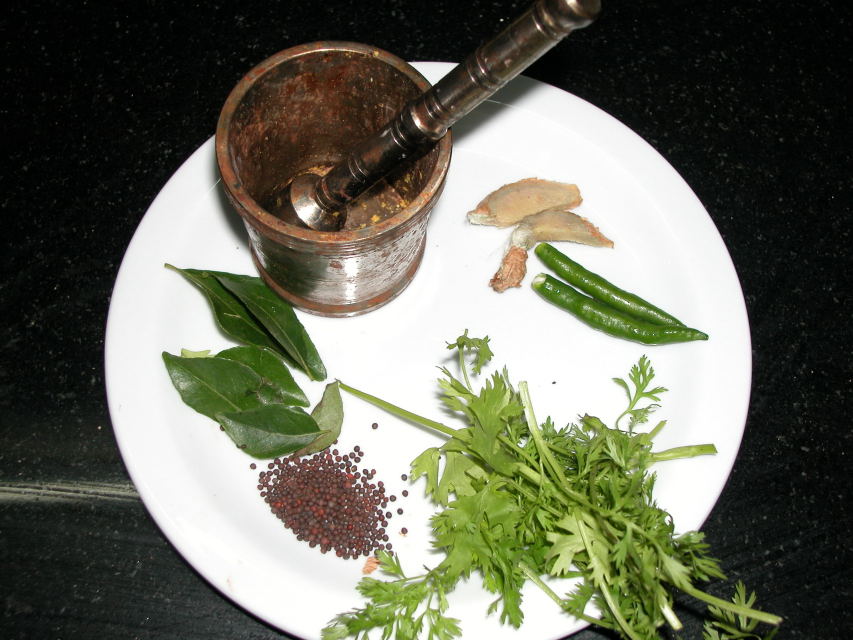
2. In a mortar, mash together a small bit of fresh ginger root, one small green chilli and some fresh coriander leaves with some sea salt or rock salt. Add this coarse paste to the buttermilk.


3. In a small saucepan, heat 1 tsp oil or ghee, and add 1/2 tsp mustard seeds, a few curry leaves and a pinch of asafoetida. Stir till the seeds splutter and transfer it into the buttermilk bowl.


4. Mix everything well. Check for salt. Serve chilled.


Masala Mor - Mildly spiced buttermilk for hot summers

Posted by admin

My morning glass of chaas


Nothing like a glass of cool buttermilk to have with breakfast, or with a heavy weekend lunch, or just about anytime, especially if you live in a place like Bombay which has 3 seasons and all summer.


Though we do occasionally resort to opening a tetra pack of Masti Chaas (Amul), these days, I make a big pot of chaas first thing in the morning and keep it to cool in the fridge. Anytime we want something cooling, a glass of chilled masala mor (Mor is buttermilk in Tamil) is never far from hand.


I have heard of methods that make buttermilk by adding vinegar to milk and so on. In India, every family used to have a tradition of 'setting' dahi / thayir (yogurt) from milk every day, but this tradition is fast declining due to the convenience of store bought yogurt. Traditionally, in my grandmom's house, she would collect the creamy layer that was the top layer of yogurt made from whole milk, into a glass jar, every morning. This jar was kept in the fridge. When it became half full, she would add some lukewarm water to the jar, to make it 3/4th full and screw the lid tightly. The jar would be hand shaken for 5 minutes or so until the butter separated out on the top. This would be emptied into a bowl with some cold water, where the butter could be easily scooped up into a ball with the fingers and transferred to another bowl. The leftover liquid was the 'buttermilk'.


Since we don't get into the merry hassles of butter making (to help our sedentary lifestyles), we make buttermilk in a much simpler fashion. Take one part yogurt to 4-5 parts water, less or more water depending on how thick you want it to be.


Spices can be added depending on the mood. Just some crushed mint leaves and chaat masala is one of my favourites. The other being toasting a pinch of hing (asafoetida) and some mustard seeds in a spot of ghee, tossing the spluttered seeds into the buttermilk with some salt. I'm sharing with you below, the traditional Tamil way of preparing masala buttermilk.


Recipe for Masala Mor
Makes 4 small glasses
Recipe can be easily scaled up
Category - Indian summer drink, Coolant, Digestive drink
Serve along with any Indian meal


1. In a large bowl, whisk together one cup thick yogurt (preferably homemade or Greek at the most) with 5 cups water. Keep aside.


2. In a mortar, mash together a small bit of fresh ginger root, one small green chilli and some fresh coriander leaves with some sea salt or rock salt. Add this coarse paste to the buttermilk.


3. In a small saucepan, heat 1 tsp oil or ghee, and add 1/2 tsp mustard seeds, a few curry leaves and a pinch of asafoetida. Stir till the seeds splutter and transfer it into the buttermilk bowl.


4. Mix everything well. Check for salt. Serve chilled.


Blogger templates. Proudly Powered by Blogger.
back to top